How to plan a group ski trip
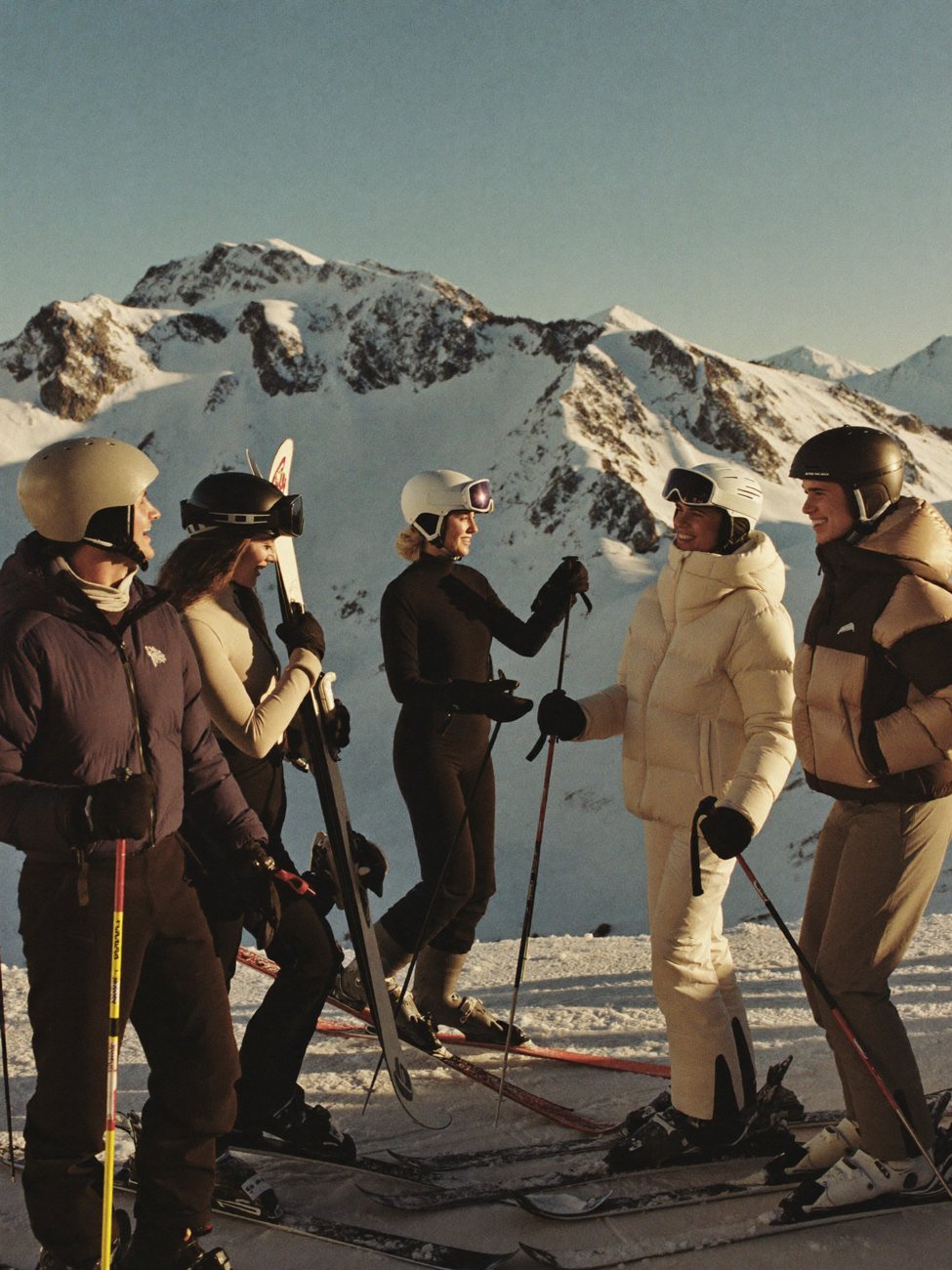
A group ski trip is the best trip there is. It’s also the hardest to pull off — more people, more abilities, more opinions, more money, more ways for it to quietly fall apart in the group chat. This is the complete guide to planning one that actually happens: every decision, in the order you should make it, and the honest version of what each one takes.
1. Start with the group, not the resort
Everyone wants to skip to picking the mountain. Don’t. The trip is shaped by who’s coming, so settle that first.
- Get the real count. “Maybe twelve of us” is not a number. A chalet for eight and a hotel block for twenty are different trips — you need a committed headcount before you can choose anything else.
- Map the abilities. Be honest about who’s a first-timer, who cruises blues, and who wants to hike for a couloir. The destination has to keep all of them happy on the same day.
- Read the vibe. A founders’ offsite, a run club, a wine club, and a college-friends reunion want four different weeks. Know which one you’re actually planning.
2. Choose a mountain with something for everyone
The single rule for a group resort: nobody should be bored, and nobody should be terrified. That means terrain across every level and a real town with things to do when someone wants an afternoon off the snow — a spa, a long lunch, shops, a sauna.
The other thing that quietly makes or breaks a group trip is whether you can all reconvene easily. A compact, walkable, ideally car-free base — one where everyone meets for the first lift and the last drink without a logistics operation — is worth more than an extra few hundred acres of terrain.
A few that earn their reputation with mixed groups: Zermatt (car-free, vast, the Matterhorn out every window), Courchevel (the gateway to the enormous Three Valleys, with a beginner’s nursery and Michelin tables both), Kitzbühel (a real medieval town, gentle and fierce terrain side by side), and St. Moritz (sun, glamour, and an afternoon scene for the non-skiers). Browse the full winter bucket list if you’re still narrowing it down.
3. Time it right
When you go changes the snow, the crowds, and the price by a wide margin.
- Mid-December to mid-April is the core European and North American season; the high, snow-sure resorts stretch later.
- Christmas, New Year, and school holidays are the busiest and most expensive weeks — magic if you have kids along, a poor-value scrum if you don’t.
- Mid-to-late January is the quiet sweet spot: real snow, fewer people, better rates.
- March brings the best of both — a deep base, long days, and sun on the terrace.
If the group wants an anchor, build the week around a fixed event — St. Moritz’s White Turf, the Hahnenkamm in Kitzbühel — and let everything else fall around it.
4. Sort where you’ll stay
For a group, accommodation isn’t a detail — it’s the basecamp the whole trip orbits.
- A catered chalet is the dream for most groups: your crew under one roof, a private chef, a fire, and somewhere that’s yours to be loud in. The best ones book a year out.
- A hotel block suits larger or mixed groups — everyone gets their own standard of room and the option to peel off, with a bar to reconvene in.
- Ski-in / ski-out vs. in-town is the real trade: slope-side convenience against being able to walk to dinner and a nightlife. For groups, a short transfer to a great town often beats a balcony on the piste.
5. Figure out getting there — together
Twelve people converging on an alpine valley from different cities is its own small project. Pick the right arrival airport for the resort, and coordinate flights so the group lands in the same window rather than trickling in across a day. For the closest gateways to every major resort — and when flying private actually pencils out for a group — see our guide to the closest jet airports to every ski resort.
6. Have the money conversation early
This is the part everyone avoids, and it’s the part that sinks more group trips than weather ever has. Do it first, not last.
- Set one per-person number up front and make sure everyone sees the same figure before they commit. Ambiguity is what breeds resentment by day four.
- Separate shared from individual. The chalet, chef, and transfers are split; lift passes, gear, lessons, and the bar tab are personal. Decide which is which on day one.
- Collect deposits early. Nothing reveals who’s actually coming like asking for money. Commitment firms up the moment a deposit is in.
A single, transparent, all-in price per person — one number that covers the lot — removes essentially all of the awkwardness. It’s the thing experienced organizers reach for, and it’s exactly how a hosted trip is structured: one published price, with the registration and the collecting of everyone’s payments handled for you rather than landing on the host.
7. Build the days — loosely
The instinct is to schedule every hour. Resist it. The best group weeks have a rhythm, not a timetable: ski the mornings, take a long lunch, let some peel off for a spa afternoon while the keen ones lap the bowl, regroup for apès, and sit down together for dinner.
Plan exactly one anchor a day — a guided off-piste morning, a fondue night up the mountain, a spa afternoon, the one table everyone wants — and leave the rest open. The trick is booking the un-bookable in advance: the guide, the best restaurant, the spa block, the instructors. Spontaneity on a group trip is a thing you arrange ahead of time.
8. The logistics nobody sees — until they’re drowning in them
Beneath the trip everyone enjoys is a layer of admin that has to be exactly right: a lift pass for every person, rentals sized to each body, lessons for whoever wants them, and — the detail that quietly ruins more rooms than anything else — who sleeps where, and in what kind of bed. Done well, all of it runs off one short skier intake form per guest. Here’s what that form is really for:
- Lift passes, bought and waiting. Every pass purchased for the group before arrival — nobody queues at a ticket window on morning one.
- Rentals, sized in advance. Height, weight, boot size, and ability collected up front, so skis and boots are fitted and waiting at the chalet instead of costing the group a morning in a rental shop.
- Lessons for whoever wants them. First-timers, rusty intermediates, kids — instructors lined up and booked early, before the good ones are gone.
- Bedding configuration — the one everyone gets wrong. This matters most in Europe, where the words don’t mean what Americans assume. A European double is one large bed — effectively a US king. A twin is two separate beds in one room, and they really are twin-sized: smaller than you’re used to. Couples want a double; friends sharing want a twin; nobody wants to find out the difference at midnight after a travel day. Every guest and every room confirmed before anything is booked.
On a hosted trip, our staff own this entire layer — registration, the money, the passes, the sizes, the lessons, the beds. Which brings us to the last decision.
The mistakes that sink group trips
- A resort that only suits experts — and three beginners who spend the week miserable on a nursery slope.
- No single decision-maker — so every choice dies in a forty-message group chat and nothing gets booked.
- Leaving the money vague — the fastest route to a quiet falling-out.
- Over-scheduling — a week so packed nobody actually relaxes.
- Booking too late — the great chalets and tables are gone six months to a year out.
Or — let someone else do all of it
Here’s the honest truth after all of the above: planning a group ski trip well is a part-time job for several months. Most of it is invisible — the chasing, the splitting, the re-booking — and all of it lands on one person.
The alternative is to do only the part you’re good at. You bring the people; we handle the destination and the chalet, the registration and the payments, the lift passes, the skier intake and rentals, the lessons, the bedding in every room, the transfers, the table, the guide, and the on-trip support — one transparent price per person, and the host travels free. You arrive as the person who made it happen, not the one still answering logistics texts from the lift line.
That’s the whole idea of the Society: the trip everyone remembers, without the months of being the one who planned it.
Bring your people here.
You gather the group; we plan the entire trip; the host travels free. Tell us who you’d take and where.
Request an invitation